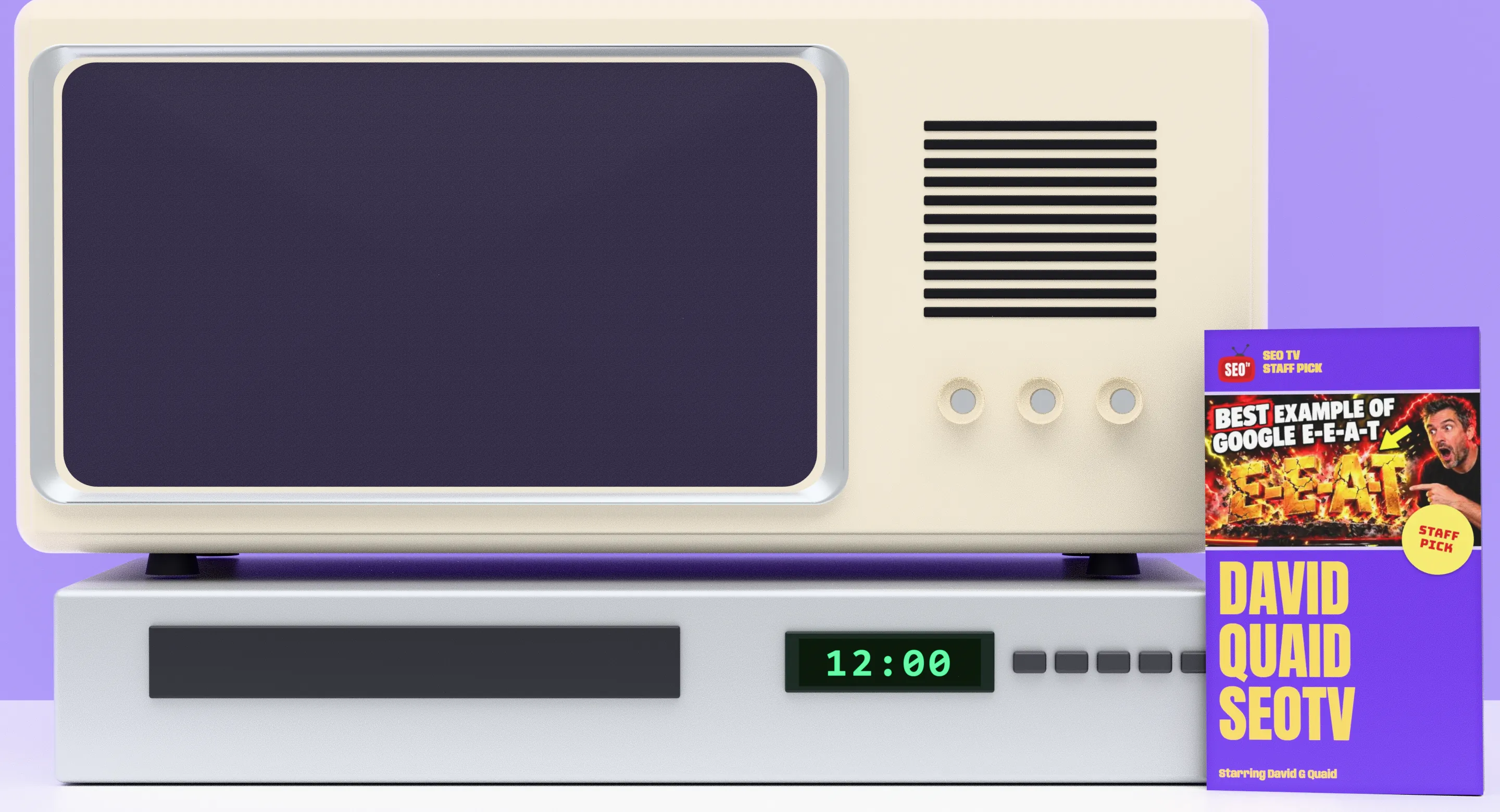
Google SEO Starter Guide Walkthrough
This Google SEO Starter Guide walkthrough from David G Quaid takes 32 minutes, which makes it the quickest honest start a beginner can get.
Can a beginner do SEO? Yes. Google says a small local business owner can probably do much of the work, and a good way to start is its free SEO Starter Guide, followed by a personal site or niche brand where you publish targeted content and test ranking behavior firsthand before taking on client accounts.
This Google SEO Starter Guide walkthrough from David G Quaid takes 32 minutes, which makes it the quickest honest start a beginner can get.
To start SEO for beginners, read one free guide, set up two free tools and then practice somewhere you are allowed to break things. In order:
Beginners need a test site because SEO is learned by watching what happens, and you can't experiment on someone else's income. David's test is blunt: "Are you really doing SEO or AEO if you don't have domains to test". He points out that hosting and domains aren't expensive, and that the test space shouldn't be a client's domain. A personal site or small niche brand also gives you something real to show, which helps if you later want a job in SEO.
Google finds most sites without help. Its guide says "You usually don't need to do anything except publish your site on the web", so a beginner can skip the paid submission services. Learning how crawling works early will save you a lot of guessing, and what Googlebot does is a good first watch.
How long SEO will take a beginner is longer than most guides admit, so plan in months. Google says "Some changes might take effect in a few hours, others could take several months." Google gives no typical time to rank, and any neat rule of three to six months is an industry habit. The best public data is an Ahrefs study: of 1 million random new URLs, "Only 1.74% of them did" reach the top 10 within a year, and 6.11% of a cleaner sample of 2 million did.
| Question | Finding |
|---|---|
| New pages in the top 10 within a year | About 2% to 6%, depending on the sample |
| Of those, how many got there within a month | 40.82% |
| Top 10 pages over 3 years old | 72.9% |
| Average age of a page ranking first | 5 years |
David reads slow starts as an authority problem, not an age problem. He says the sandbox doesn't exist, and that in a simplified picture ranking multiplies its factors, so 10,000 pages times zero authority is still zero. His SEO strategy for a new website covers how to start building that authority early.
What a beginner should learn first is the plain mechanics: how Google finds a page, why it ranks one page above another, and which searches are worth chasing. Once a site has a few pages on one subject, group them and link them together, which is the start of topical authority. David's reason for caring is simple. He says "you have to get into the top three rank position" before much traffic arrives, so a narrow subject you can win beats a broad one you can't.
Free SEO tools for beginners are better than most people expect, and you can go a long way before paying for anything.
| Tool | What it does for a beginner |
|---|---|
| Google Search Console | Shows what Google thinks of your site, and how to use it has its own episode |
| Bing Webmaster Tools | Free reports, and David uses it to see what already works for competitors |
| Microsoft Clarity | Heat maps and session recordings, with a full tutorial |
| Google Business Profile | The first job for any local business |
How hard SEO is to learn has never been measured, so treat every figure you read as opinion. By common report the basics take weeks to a few months, and judgment takes years. David's line is that "the best way to learn SEO is to understand the basic mechanics", and that it gets simpler once you do. He sends people to the same place Google does: "The Google starter guide answers all of these questions".
SEO is worth it for small businesses when customers search for what they sell, and no neutral figure says more than that. The money side is easy to state: Google says "it costs nothing to appear in our organic search results", and paying for ads has no effect on them. The cost is time. If you're short of that, Google itself says you might consider hiring a professional.
A beginner should avoid two things in SEO: publishing at volume and buying promises. David warns that "a few hundred pages on a brand new domain is enough" to trigger scaled content trouble, so a beginner with an AI writer can do real damage quickly. The promises are easier to spot, since Google says "No one can guarantee a #1 ranking on Google."
After that, keep learning from people who show their work. Local SEO has a beginner series on its shelf, the SEO videos on this site come with transcripts, and the best podcast on SEO will fill your commute.
Sources for this answer were checked on Nov 1, 2026.
More SEO and podcast questions from the same counter.